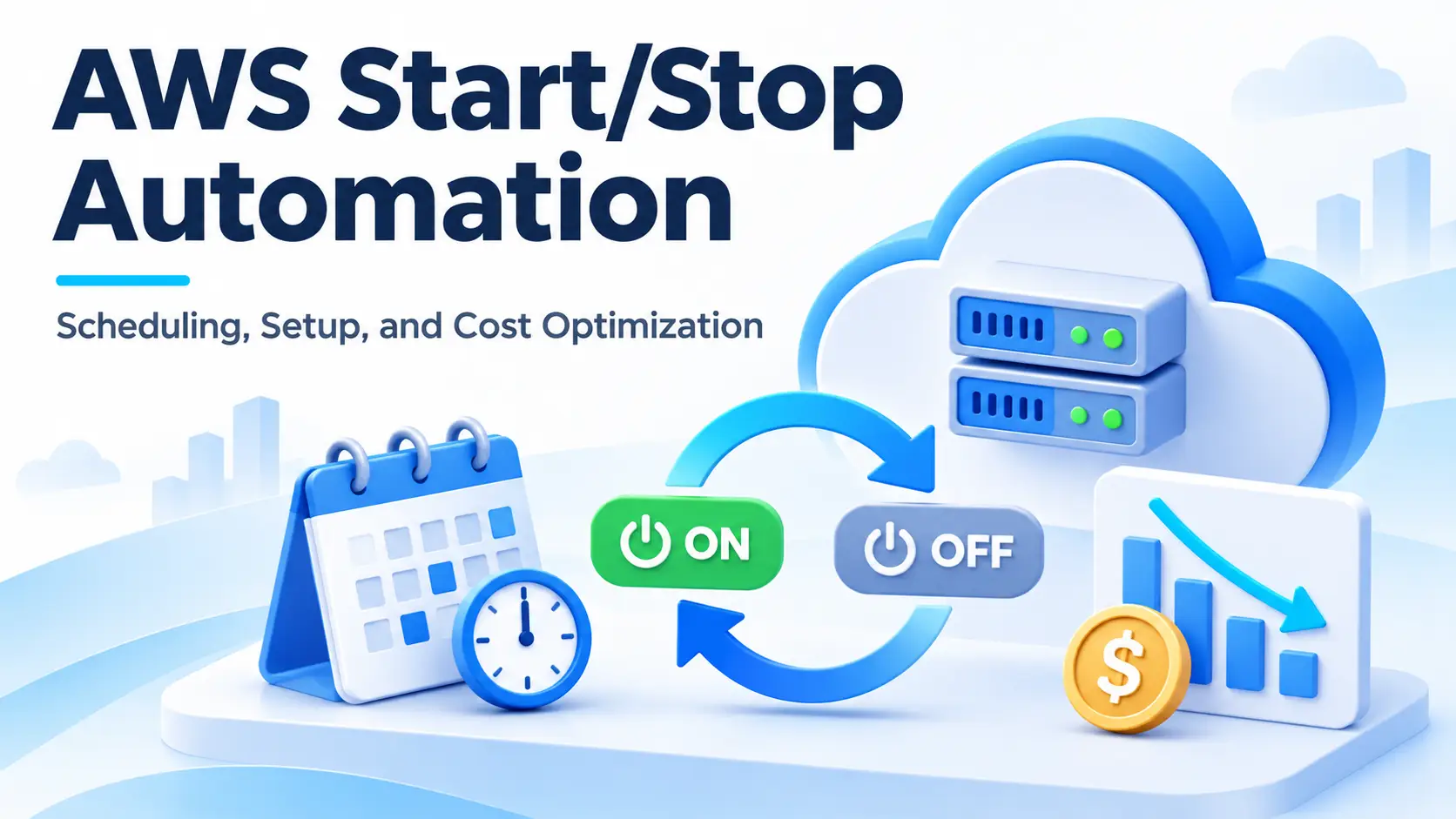
How to Automate AWS Startup and Shutdown: Setup Procedures, Selection Guide, and Points to Note
- aws
- Amazon EC2
- Operation automation



In Thailand and Vietnam, the e-commerce market is expanding, with online sales using platforms such as Shopee, Lazada, and TikTok Shop becoming widespread. However, there are differences between countries in terms of major platforms, payment methods, logistics, and consumer behavior.
When Japanese companies enter the market, in addition to selecting sales channels, they need to consider the coordination of order processing, inventory management, payment processing, and logistics, as well as the operational structure between the Japanese headquarters and the local subsidiary.
This article outlines the differences between the e-commerce markets in the two countries and the key system and IT operational points you should be aware of before entering the market.
According to the U.S. International Trade Administration (ITA), Thailand's e-commerce market was projected to grow from approximately $218.3 billion in 2024 to approximately $234.5 billion in 2025. Over 80% of online sales are conducted via mobile devices, and social commerce using TikTok Shop is also growing, in addition to Shopee and Lazada.
According to the E-commerce and Digital Economy Department under Vietnam's Ministry of Industry and Trade, the e-commerce market size in 2025 is projected to reach approximately $31 billion, representing a 25.5% growth. A survey by e-commerce data analytics firm Metric also shows that the GMV (Gross Merchandise Volume) of the four major platforms—Shopee, TikTok Shop, Lazada, and Tiki—is projected to reach approximately 429.7 trillion VND, a 34.75% increase year-on-year. The $31 billion figure represents the entire e-commerce market, while the 429.7 trillion VND figure is for the four major platforms alone.
There are differences in the major platforms and e-commerce usage trends between Thailand and Vietnam. In particular, in Vietnam, there is a growing concentration on Shopee and TikTok Shop, and by 2025, these two companies are projected to account for approximately 97% of the GMV of the four major platforms.
The main differences are as follows:
Comparison item | Thailand | Vietnam |
Major Platforms | Shopee and Lazada are the main players. TikTok Shop is also growing. | Shopee and TikTok Shop are the main platforms. |
Mobile usage | Over 80% of online sales are conducted via mobile devices. | The use of e-commerce via smartphones and social media is expanding. |
Sales Features | Live commerce and social commerce are expanding. | The presence of social commerce through TikTok Shop is significant. |
In Thailand, mobile-based e-commerce is well-established. According to ETDA data presented by ITA, mobile commerce accounts for 74% of e-commerce transactions, and transactions via apps account for 65%. Mobile wallets also account for 23% of all transactions, so e-commerce sites need to provide a user-friendly interface that allows customers to easily search for products, purchase, and pay using their smartphones.
In its section on cross-border e-commerce, ITA states that major platforms such as Shopee, Lazada, and TikTok have approximately 3 million sellers and over 300 million items listed.
When selling from Japan to Thailand, it's important to be aware of changes in the tax system. Previously, imports under 1,500 baht were exempt from customs duties, but this was abolished on January 1, 2026. Currently, regardless of the price, customs duties and a 7% VAT are levied according to the item. In cross-border e-commerce, sales prices and profitability are estimated including customs duties and VAT.
In Vietnam, there is a growing concentration of businesses on Shopee and TikTok Shop. When starting a new e-commerce business, it is advisable to consider integrating with social commerce platforms, including TikTok Shop, in addition to Shopee, from the initial stages.
Meanwhile, Metric's research indicates that the number of sellers operating on the four major platforms in 2025 will decrease by approximately 7.4% year-on-year to about 600,000. As GMV increases while the number of sellers decreases, competition is intensifying.
In terms of regulations, the Electronic Commerce Law and Government Decree No. 248/2026/NĐ-CP came into effect on July 1, 2026. A transitional period has been established for the electronic identity verification obligations of sellers and live commerce broadcasters, which will be applied from January 1, 2027.
In parallel with channel selection, we will also incorporate identity verification into the operational design.
The three main sales methods are: "opening a store on an e-commerce marketplace," "building your own e-commerce website," and "utilizing social media and live commerce."
You don't have to stick to just one method; you can combine e-commerce marketplaces with social media, or use your own e-commerce site in conjunction with multiple marketplaces. Choose the method that best suits your products, target audience, local brand awareness, and operational structure.
This method involves opening a store on popular e-commerce marketplaces such as Shopee, Lazada, and TikTok Shop.
Since you can utilize existing customer acquisition platforms and often have features such as payment and delivery already in place, it becomes easier to enter the market than building a sales environment from scratch in-house.
On the other hand, opening stores on multiple online marketplaces increases the number of platforms you need to manage, such as product information, pricing, inventory, and orders. When expanding your channels, you should decide in advance whether to manage each channel individually or centrally.
With your own e-commerce site, you can design the design, product information, campaigns, and membership features to match your company's policies. It makes it easier to have direct contact with customers and is well-suited for brand building and utilizing customer data.
Consequently, you must establish your own systems to support sales, including payment processing, order processing, inventory management, logistics, and CRM. You will also need to be able to handle local payment methods and logistics services.
If you already operate an e-commerce site or core systems in Japan, you need to decide whether to use your existing environment overseas or to prepare a separate environment for the local market.
In Thailand and Vietnam, social commerce, which connects social media to sales, is also spreading.
TikTok Shop allows users who watch videos or live streams to purchase products directly. Its key feature is the shortened path from product awareness to purchase.
When combining e-commerce marketplaces and your own e-commerce site, you need to define the role of each channel and operate accordingly.
When operating multiple e-commerce marketplaces or your own e-commerce site, information on products, inventory, orders, customers, payments, and logistics becomes scattered across multiple systems. Managing these individually increases the likelihood of missed updates, inventory discrepancies, and delays in order processing.
Before entering the market, we will organize which information will be shared and where.
Updating product names, prices, images, SKUs, and stock levels individually across multiple sales channels can easily lead to inconsistencies in the information.
For example, if a product sells on one online marketplace but the inventory count isn't reflected in other channels, there's a possibility that the store might accept orders exceeding its actual inventory.
When operating multiple channels, we provide a system to centrally manage product and inventory information and link it to each e-commerce marketplace and our own e-commerce site.
When selling through multiple channels, order data such as order details, buyer information, shipping address, and payment status will also be separated.
While it's possible to process orders individually through each marketplace's management screen, the burden of verification and data entry increases significantly as the number of orders grows. By centralizing order information into an OMS (Order Management System) or ERP (Enterprise Resource Planning) system, you can manage order status and sales in one place.
When using customer information in CRM or similar systems, the scope of data that can be acquired differs depending on the sales channel. Organize the information that can be held on your own e-commerce site and on e-commerce marketplaces, and then decide which channels to integrate with.
After a sale, multiple processes follow, including payment processing, shipping, and delivery. A configuration is needed that allows for data transfer between the e-commerce system, payment services, warehouse, and delivery system.
For payments, you decide which system will manage order information and payment status. For logistics, you link order processing, shipping instructions, inventory allocation, and delivery status with warehouse and delivery company systems.
As the number of sales channels increases, processing becomes more fragmented if each channel is operated individually. At the start of the business, you need to decide how much of the system will be connected to the others.
Before launching an e-commerce business in Thailand or Vietnam, we will organize sales channels, data management, payment and logistics, headquarters coordination, data storage locations, and operational structures.
The more you add to the system after entering the market, the more likely you are to encounter duplicate management and operational complexity. It's crucial to define the overall picture from the beginning, from sales to the backend.
In addition to e-commerce platforms such as Shopee, Lazada, and TikTok Shop, your own e-commerce site is also an option.
We compare factors such as customer acquisition power, fees, integration with existing systems, and operational burden to select the channel that best suits our company.
We will decide which system will be used as the basis for information regarding products, orders, and inventory.
For example, product information can be managed using an ERP system, inventory using a WMS, and orders using an OMS. Another option is to incorporate some of the information into a local e-commerce system.
If the management source is unclear, prices and inventory levels are likely to differ across systems. Clearly define which system will be the master system.
If you are developing your own e-commerce site, you should check for compatibility with the payment methods and logistics services used locally.
In Thailand and Vietnam, in addition to credit cards, QR code payments, bank-based payments, and e-wallets are also used. If you simply deploy an e-commerce site designed for the Japanese market, you may not be able to accommodate the payment methods preferred by local users.
In logistics, we organize everything from product storage locations and shipping methods to delivery companies and return handling. If using local warehouses or 3PLs, we also confirm how to connect them to order processing and inventory systems.
Related article:What is mobile payment, which is becoming widespread in Thailand and Vietnam? An explanation of its impact on corporate systems.
If you manage the local e-commerce business from the Japanese headquarters, you will need to decide what data to send to headquarters and how often to update it.
The main targets include sales, inventory, product master data, orders, accounting, and customer data. Reporting to headquarters and data synchronization between sales channels are considered separately.
For example, daily sales data may suffice for business management purposes, while daily or monthly data may be sufficient for accounting information. On the other hand, inventory shared across multiple channels may exceed actual inventory levels if updates are delayed during sales or live commerce events when orders are concentrated.
The inventory synchronization frequency is determined based on order volume and the marketplace's API specifications. It does not need to be the same as the reporting frequency to headquarters.
If the currency, language, or product codes differ between headquarters and the local branch, we will also determine the data conversion method.
If you use overseas cloud services or share data with your Japanese headquarters, you should also check the regulations regarding data transfer to other countries.
Thailand has a Personal Data Protection Act (PDPA) in effect, which sets out certain conditions for transferring personal data abroad. In addition, certain service providers are obligated to retain traffic data under the Computer Crime Act.
In Vietnam, the Personal Data Protection Law and Decree 356/2025/NĐ-CP came into effect on January 1, 2026. Transferring personal data collected in Vietnam to servers outside the country, or storing and processing it in overseas cloud services, constitutes cross-border data transfer.
For cross-border data transfers, impact assessment documents must generally be prepared and submitted to the authorities within 60 days of the start of the transfer. Some exemptions exist. Since the applicable conditions vary depending on the type of data and the transfer method, it is necessary to consult with local experts for individual cases.
For example, if customer information acquired in Vietnam is stored in a cloud in Singapore and then linked to the CRM at the Japanese headquarters, the data will move in the following order: Vietnam → Singapore → Japan.
With this configuration, we will clarify the following points:
Which data will be transferred abroad?
In which country/region will it be preserved and processed?
Which will be the managing entity: the Japanese head office or the local subsidiary?
Have you met the necessary procedures for data transfer?
Where should logs and backups be stored?
Along with system development, we also define the scope of responsibility for operation.
When multiple organizations are involved, such as the Japanese head office, local subsidiaries, local vendors, and Japanese IT vendors, it is important to clearly define who is responsible for what.
The main operational tasks are as follows:
Account and Permission Management
Responding to system failures
Security monitoring
backup
System Change
Cloud usage fee management
Communication with e-commerce platforms and logistics providers
If only the builders understand the system configuration, responses to failures or changes in personnel will be delayed. Clearly define the roles and responsibilities of the operations team to create a system that is not dependent on specific individuals.
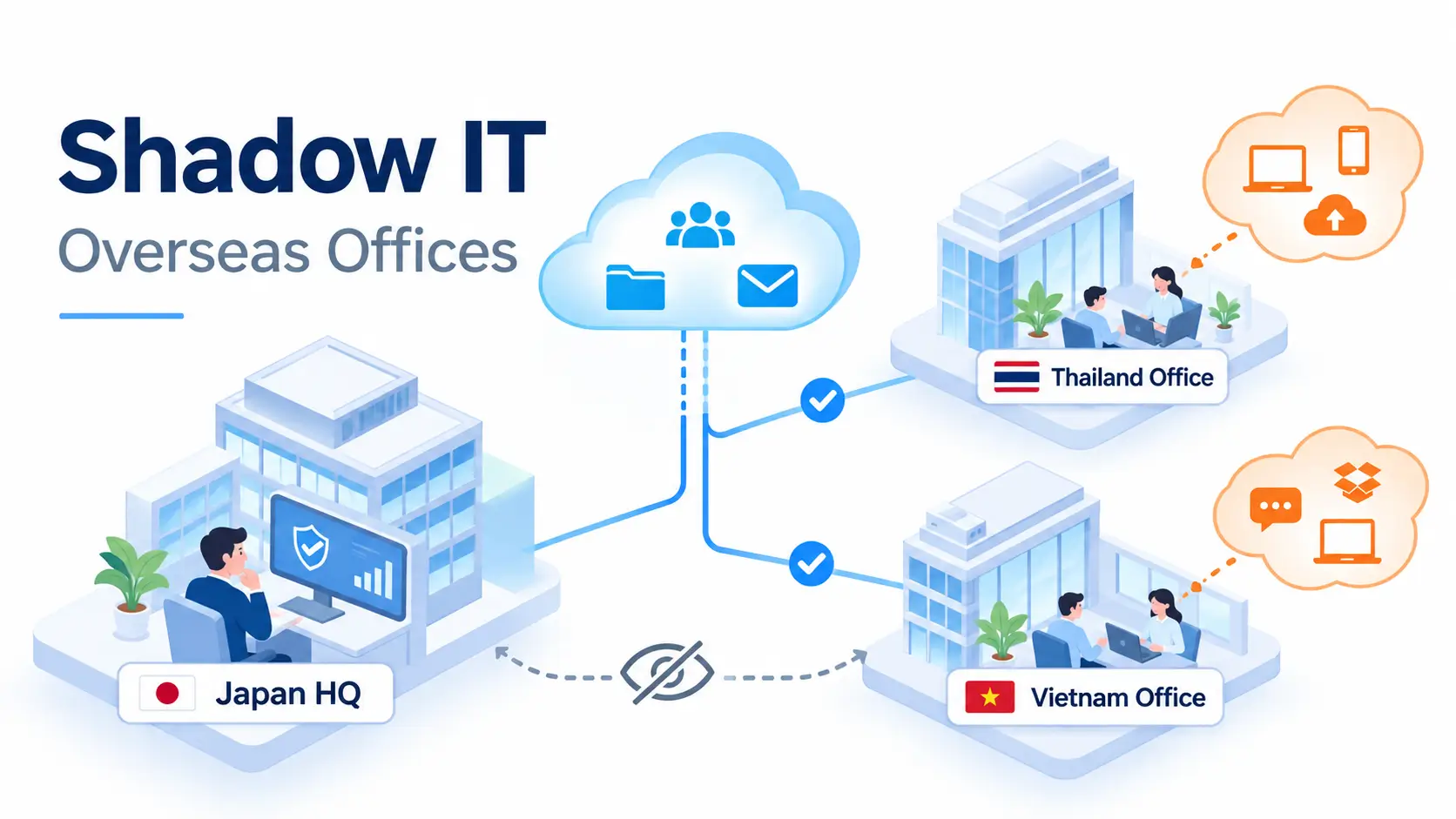
Related article:Why IT Systems at Overseas Subsidiaries Often Become Black Boxes|Insights from My Year in Vietnam as an IIJ Sales Representative
When launching an e-commerce business in Thailand or Vietnam, it's essential to design not only the sales channels but also the entire process, including product, inventory, and order management, data storage, coordination with the Japanese headquarters, and operational responsibilities.
Organizing the data flow and operational entities before entering the market makes it easier to adapt to increases in sales channels and transaction volume.
IIJ Managed Cloud provides support for building and operating cloud environments in the ASEAN region, including Thailand and Vietnam. We can also assist with cloud migration of e-commerce systems and operational structures that span across Japanese headquarters and local subsidiaries.
This guide is for companies considering expanding into Vietnam or those looking to review their local subsidiary's IT management. It explains cybersecurity-related laws and regulations, personal information and data management, points to note when using cloud services, and the division of roles between the Japanese head office and the local subsidiary.